CESARE CRUGNI : ARTISTA ITALIANO, SCULTORE E CAPOSCUOLA DELLA SCULTOMAIEUTICA
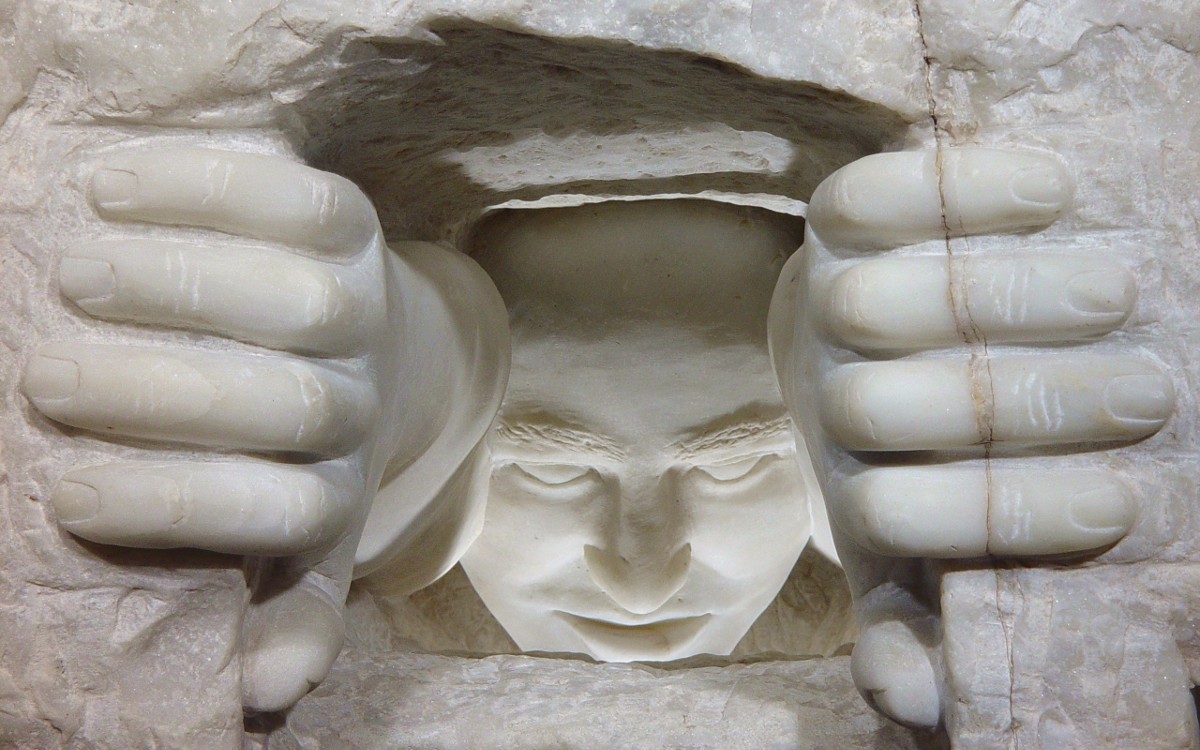
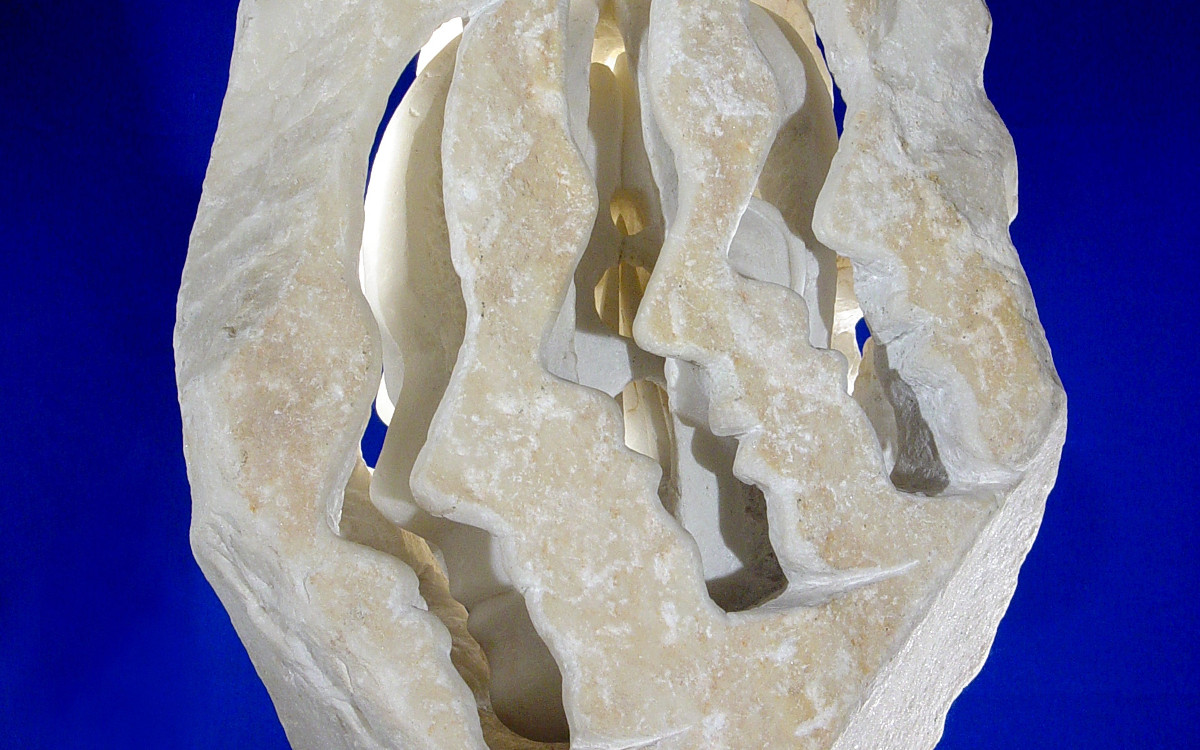
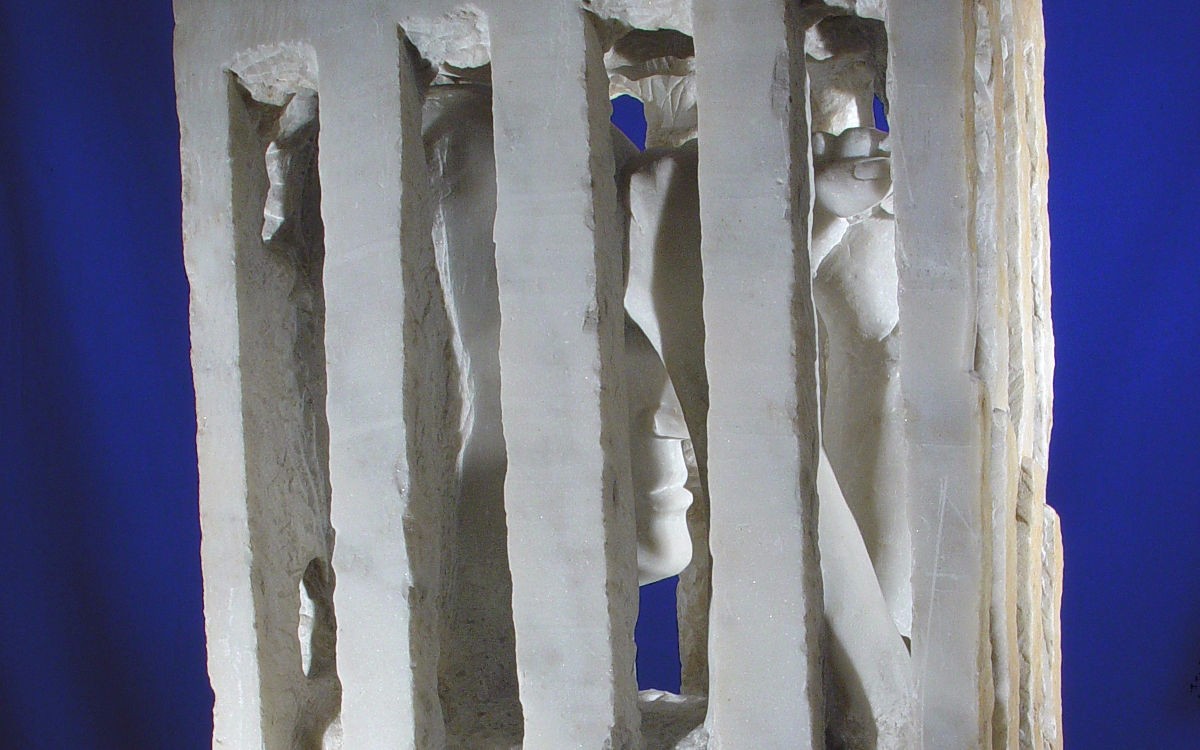
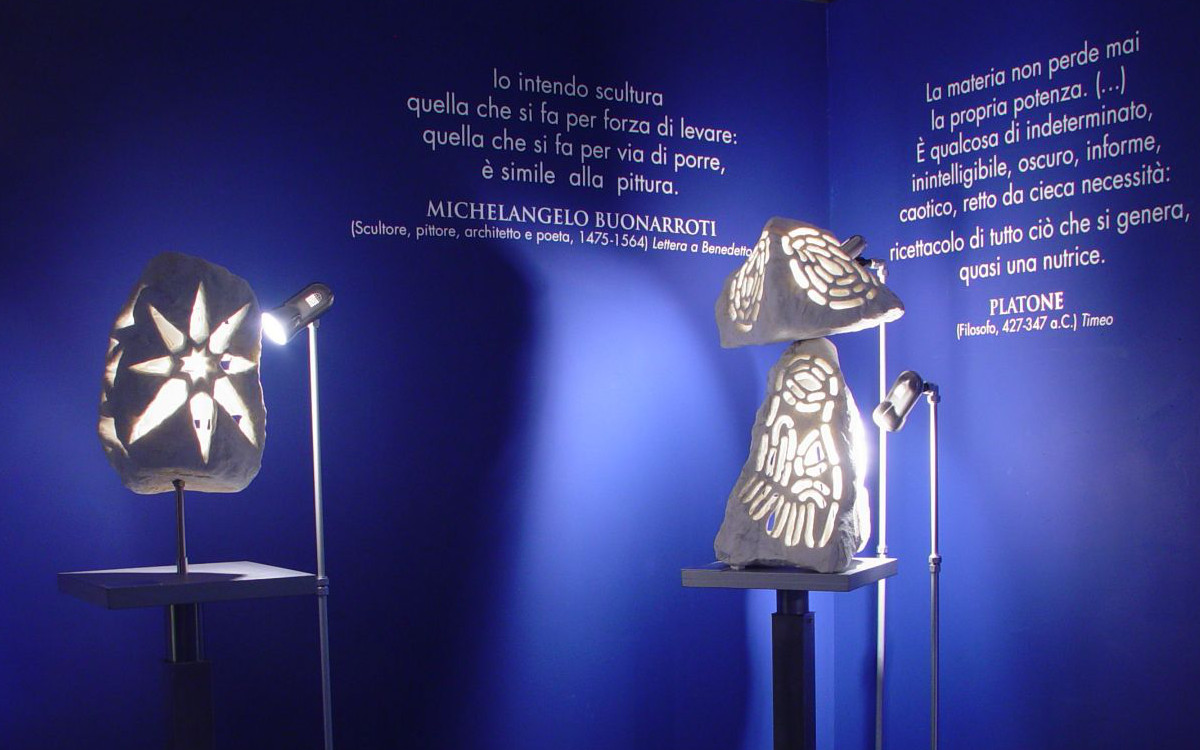
La Scultomaieutica è un modo di esprimere l'arte attraverso una nuova tecnica scultorea: scolpire all'interno.
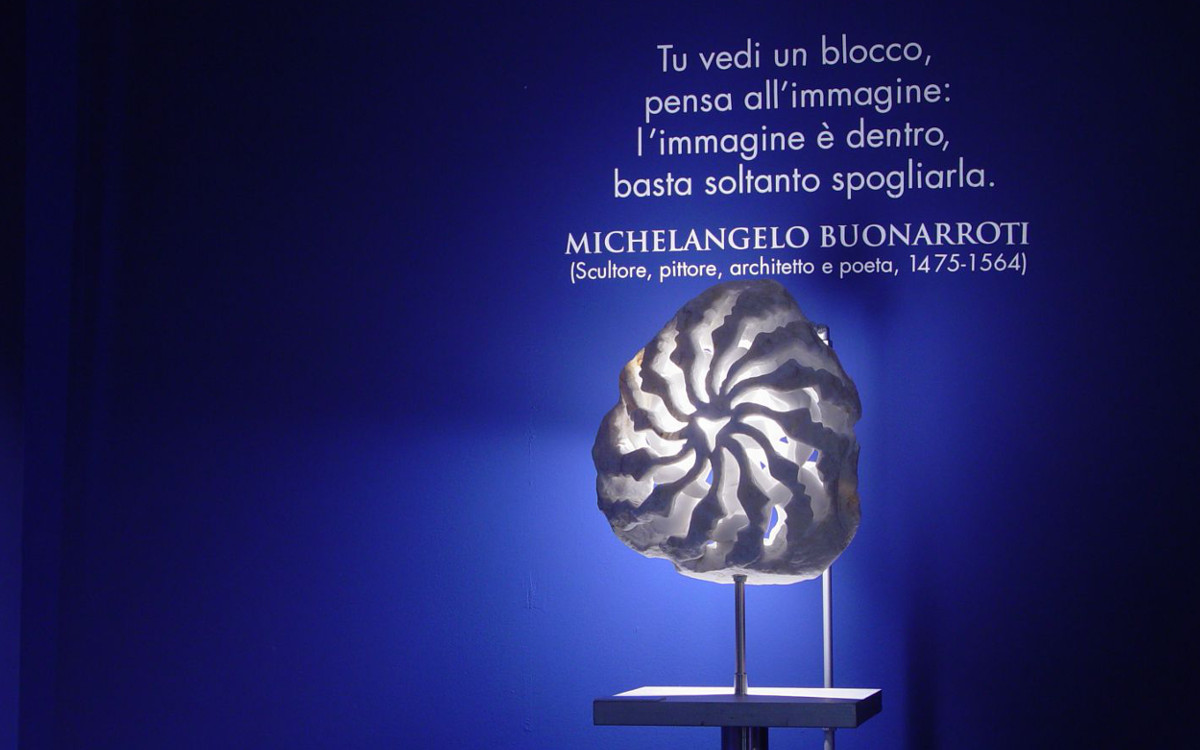
Dall' atomo alle galassie, la luce, la vita e l'energia scaturisce sempre dal nucleo verso l'esterno, dalla quarta dimensione; tutta la cosmo-essenza esiste nella realtà delle cose. La stragrande parte dell'universo è materia invisibile (cosmo-labirinto); il grande maestro scultore Michelangelo Buonarroti asseriva: "tu vedi un blocco, pensa all'immagine, l'immagine è dentro, basta soltanto spogliarla". Mi sono detto: "Se riesco a pensare all'immagine imprigionata nel blocco, significa che il mio pensiero e la mia energia vi sono già penetrati dentro, tra gli spazi vuoti e gli spazi pieni; così, tramite la mia scultura, è come se facessi una radiografia della mia immaginazione e la trasmettessi ad altri".
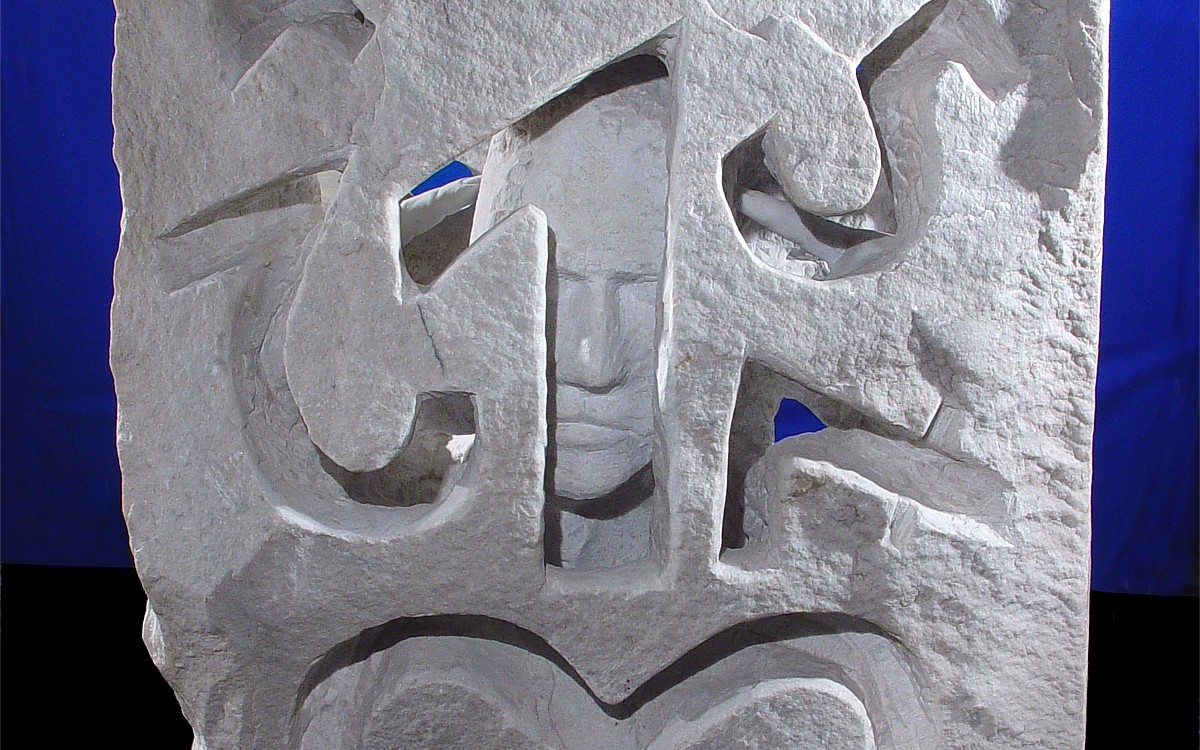
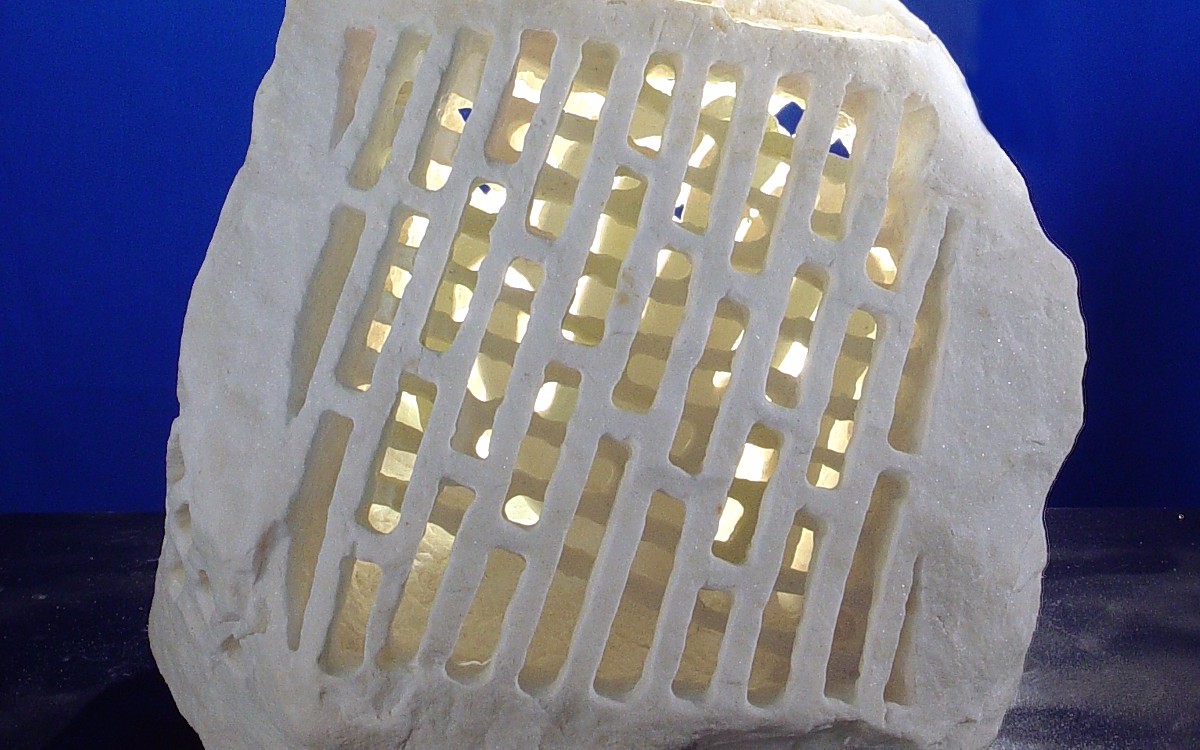
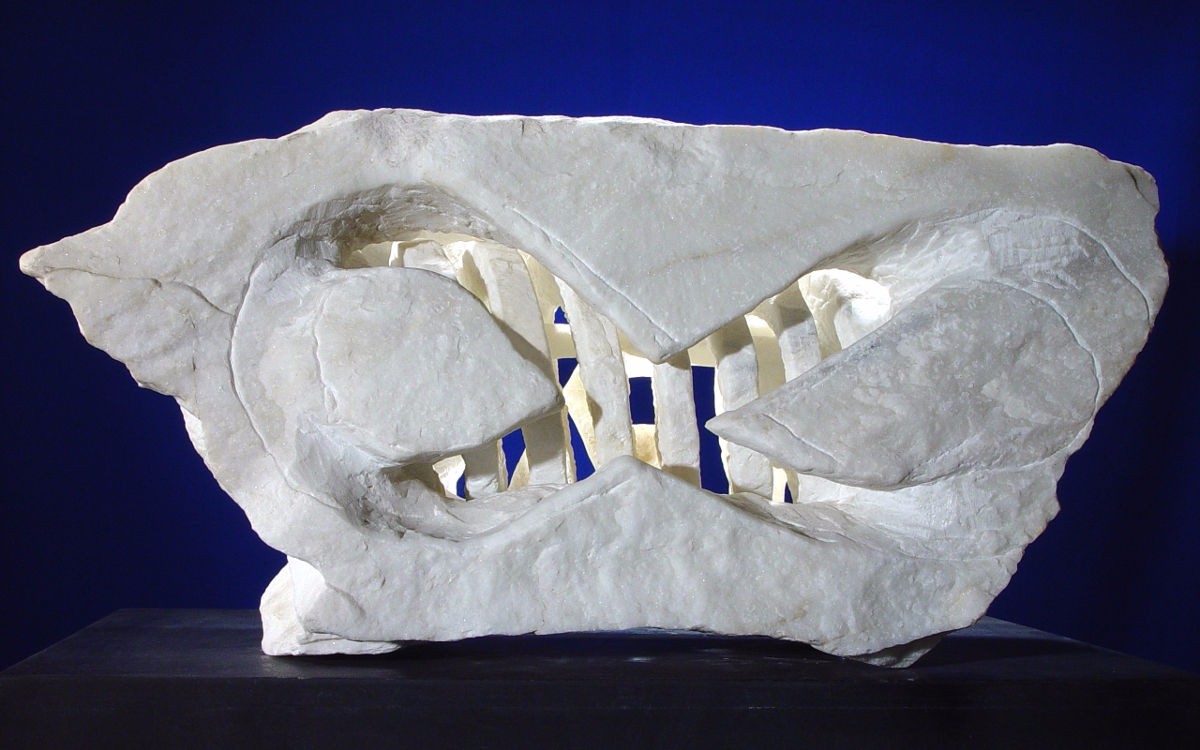
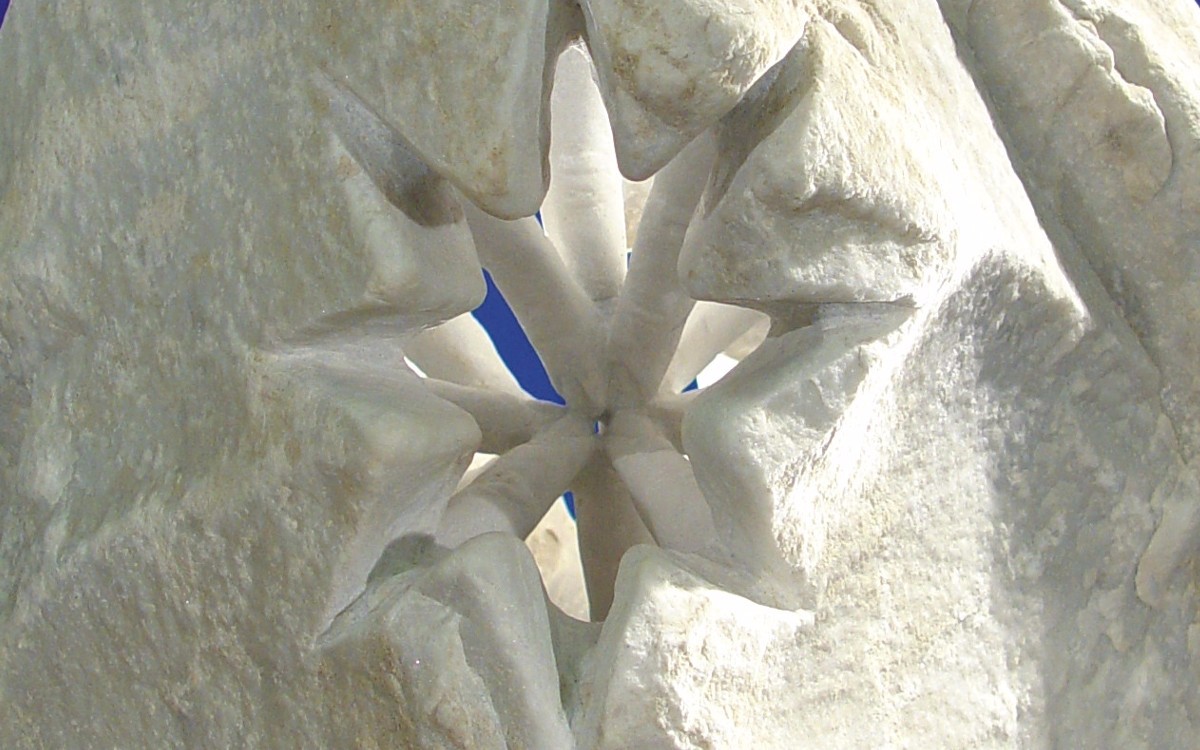
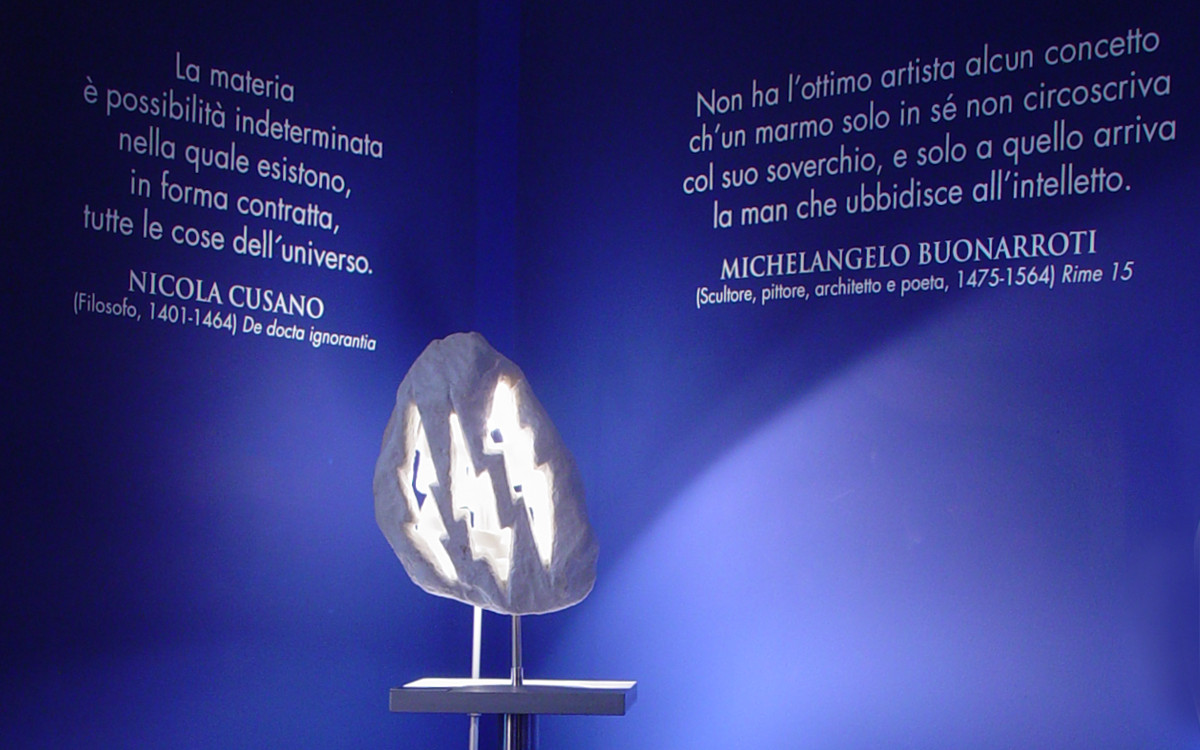
Se pensiamo al nostro corpo e alla nostra mente nella sua meravigliosa composizione cellulare e miriade di atomi ci rendiamo conto che questi, dal loro interno, ci infondono vita, energia ed intelligenza di pensiero. Per tutte queste ragioni lascio inalterato il blocco di marmo nella sua forma originale esterna, essendo già una naturale cosmo scultura di per sé irripetibile. L'opera lega le feritoie e buchi, divenuti simboli, con la scultura vera e propria al suo interno, in un unico insieme. (...)
Cesare Crugni
La scuola socratica si rivolgeva agli allievi ed a tutti coloro che avevano sete di sapere, insegnando a mettere in luce la verità traendola dalle profondità del proprio animo.
II filosofo amava accostare il suo metodo a quello della propria madre, Fenarete, di professione levatrice, appunto per rapportare l’abilità di trarre fuori i nascituri dalle pance delle gestanti.
Cesare Crugni ha in sommo grado appreso l’arte della maièutica (dal greco « maieutiké téchne», ostetrica) scavando e plasmando il marmo all’interno, tirandone fuori la quintessenza formale e spirituale.
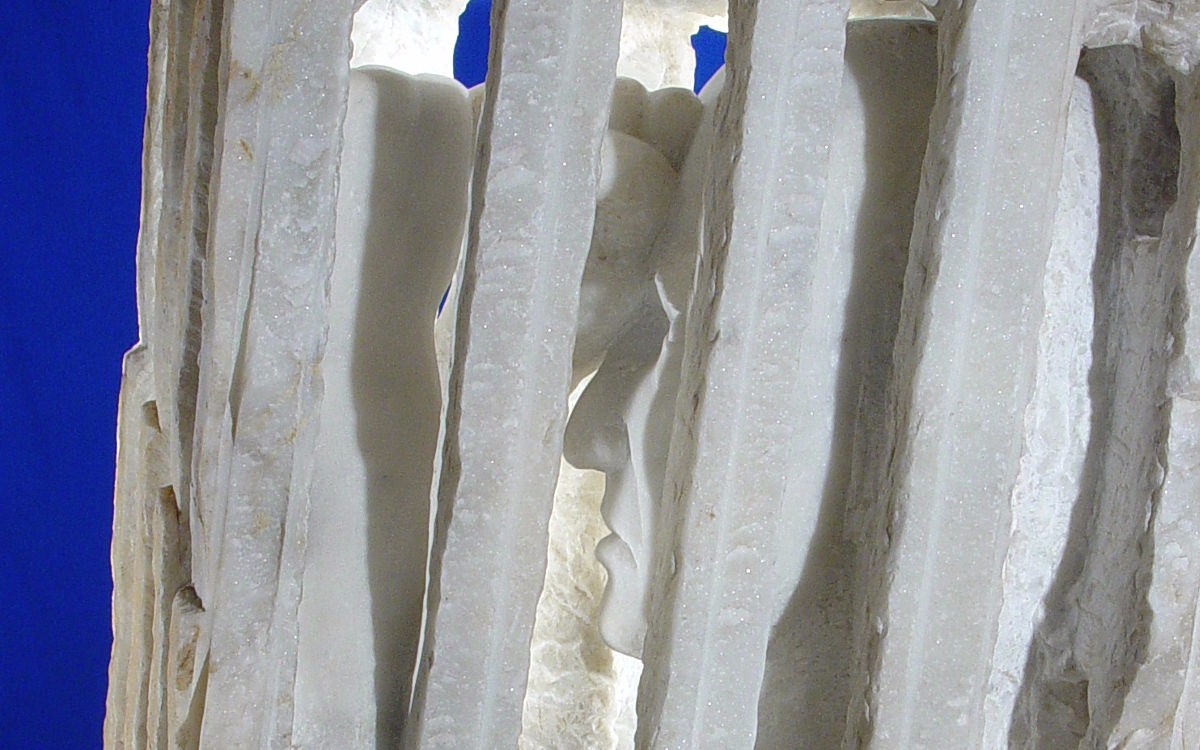
Questo artista di Savona conosce alla perfezione l’arte del tutto tondo, del bassorilievo, delle composizioni di gruppo, dello sbalzo e dell’altorilievo. Ma la sua tecnica particolare e originale consiste, lavorando accortamente di scalpello, di evidenziare nell’interno dei blocchi - in pietra o in marmo - volti umani, mani e braccia imploranti, visi avvinti tenacemente alla materia, figure ch’egli scava dal profondo traendone fuori l’anima con energica possanza. (...)
Antonino De Bono
In quale misura è importante Cesare Crugni? La risposta è rapida. Essa dice che egli non aspira a disintegrare il mondo. Per lui ha grande significato arrivare a conoscere ciò che lo tiene insieme. Una tale discussione su forze coesive è di sicuro molto importante! proprio questo nucleo è la qualità di tutta l'opera di CESARE CRUGNI.
Innata semplicità sostiene lo scultore nell'attuare in valida forma le sue forze creative. La qualitativa originalità del suo idioma lascia prevedere che l'attitudine filosofica dell'artista determina lo stampo dell'opera.
Se dunque, proprio all'inizio, si evidenzia il principio "PARS PRO TOTO" si può penetrare più facilmente nella traccia di questa creativa realtà.
Nella PARS PRO TOTO la parte sta per il tutto. A titolo d'esempio prendiamo una goccia d'acqua. Se ne potrebbe arguire che la goccia può certo sapere che è nel mare. Intendere al contrario che il mare è anche nella goccia d'acqua diventa già più difficile.
Così si spiega anche CESARE CRUGNI: "L'uomo può certo sapere che si trova nell'universo. Ma solo di rado si rende per l'appunto conto che l'universo è in lui".
CESARE CRUGNI lo sa molto bene e la sua risposta: "Praticamente io sono l'universo" - convince. Tradotte nella realtà queste parole sono intanto per lui un blocco di bianco e nobilissimo marmo di Carrara. A questo punto bisogna rifarsi da lontano. Si può dire che lo scultore Cesare Crugni ha la grande dote di intuire lo stato di aggregazione di detta materialità. Questo talento pieno di grazia permette allo scultore di scolpire, si noti bene, l'interiorità di questo materiale e non la sua forma esteriore. Qui incide poi per svelare l'unità di micro e macrocosmo.
Siamo di fronte all'opera del genio! (...)
Pius Piazolo
(...) "La sua è una "scultura-labirinto" (Borges lo capirebbe) popolata di simboli, che nasce dall'esterno e segue una visione interna innovativa, "rovesciata": nuova quindi e totalmente diversa da quella tradizionale". Strutture che si coagulano in "labirinti di luce (il marmo bianco di Carrara ha qui una fondamentale importanza) e diventano di colpo, in avvolgenti metamorfosi, immagini reali e oniriche: volti, mani, dita, astrazioni geometriali, vuoti musicali. Un mondo iconologico vitale, poetico, che palpita fra valori visuali e ritmici, fra ombre e luci, tra simboli esistenziali e cosmici. Dall'umano agli ineluttabili misteri dell'Universo e di Dio, dell'amore e del sesso, della vita e della morte. le mani di Crugni "vedono come occhi" nel cuore della materia. "Appare evidente (ho scritto in quel mio testo), a questo punto, che la sfida di Crugni non è più contro la scultura: è una sfida contro se stesso. Dove arriverà la sua magia?". (...)
Pedro Fiori
(...) Hanno mostrato apprezzamento e interesse per la sua arte studiosi, giornalisti, critici, personalità importanti in diversi campi, tra i quali: Papa Benedetto XVI, Sir James Noel White (già Honorary Officer e Presidente del Craft Council World, U.N.E.S.C.O) che ha detto di lui: "L'arte di Cesare Crugni mostra la realtà dell'arte del suo tempo", il presidente della Repubblica Italiana Francesco Cossiga, Il presidente della Repubblica Italiana Carlo Azzeglio Ciampi, Pius Piazolo, il Segretario di Stato Vaticano Cardinal Tarcisio Bertone, Federico Zeri, Monsignor Gianfranco Ravasi, Salvatore Settis, Heinrick Kuch, Siegfried Burmester, Peter Gerlinghoff, Klauco Partel, Luciano Pasquale, Charlotte Pawlowitsch, Antonino De Bono, Pedro Fiori, Ugo Piacentini, Piero Badaloni, Liliana Fioriti e Giorgio Coggiola, Giovanni Farris, Oreste de Fornari, Aldo Repetto (A.N.S.A.), Pier Antonio Zanoni, Giacomo Migoni, Manfred e Marina Beelke, Aldo Pastore, Marco Pennone, Angelo Maria Raggi, Giorgio Falossi, Giancarlo Ruffino, Tino Parma. Cesare Crugni vive e lavora in Italia a Savona.
|
CESARE CRUGNI : ITALIAN ARTIST, SCULPTOR AND FATHER CREATOR OF SCULTOMAIEUTICA
The Scultomaieutica is a way to express art through a new sculptural technique: the inside sculpturing.
From atom to galaxy, light, life and energy, always spring from the nucleus to the outside, from the fourth dimension; the whole of the cosmos essence, exists in the reality of things. The most part of the Universe is invisible matter (cosmos-labyrinth); the great master sculptor Michelangelo Buonarroti used to say: “You see a block, think about the image, it is inside, you just have to strip it”.
I said to myself: “If I can think of the image within the block, it means that my thought and my energy have already penetrated it, between empty and full spaces; so through my sculpture can be as if I took a radiograph of my imagination, and sent it to others. If we think of our body and our mind, in their beautiful composition of cells and myriads of atoms, we realize they give us life energy and thought intelligence, from their inside. For all these reasons, I keep the marble inalterable in it external original form, because it is already a sort of cosmos-sculpture which is one and only.”
The work links the whole and loopholes now became symbols, together with the inside of the real sculpture, in a whole. (...)
Cesare Crugni
Socratic school spoke to the pupils and to all the people who wanted to know more, teaching now to put truth into light, taken it from the inner of their own soul.
The philosopher loved comparing his method to the one of his mother Fenarete, a midwife, just to measure the ability of bringing to life the unborn children from the stomach of the pregnant women.
Cesare Crugni briefly learned the art of maieutica (from the Greek form “maieutiké téchne” as obstetrics) digging and moulding the marble from the inside, drawing the formal and spiritual quintessence.
This artist from Savona, knows perfectly the art of tondo, of bass-relief, of group composition, of embossed work and of high-relief. But his particular and original technique, consists of underlining into the inside of stone or marble blocks, human faces, imploring hands and arms, faces strictly surrounded by matter, all figures that, thanks to his keen chisel-working, he digs from the deep, bringing to light their own souls with energic power. (...)
Antonino De Bono
To what degree is Cesare Crugni important?
The answer comes rapidly. It states that he does not aspire to disintegrate the world. For him it holds a great significance to arrive at a knowledge of that which holds it together. Such a discussion on the cohesive forces is surely very important! Precisely this nucleus is the quality of all the work of CESARE CRUGNI. Innate simplicity sustains the sculptor in actuating in a valid form his creative forces. The qualitative originality of this idiom allows the foreseeing of how the philosophic aptitude of the artist determines the stamp of the work. If therefore, right at the beginning, there is the principle “PARS PRO TOTO” you can penetrate more easily into the tracks of this creative reality.In the PARS PRO TOTO the part stands for the whole, it contains the whole. As an example we take a drop of water. You could deduce that the drop of water can certainly know that it is in the sea. To understands that on the contrary the sea is also in the drop of water becomes indeed more difficult. So explains also CESARE CRUGNI: Mankind can certainly know that he finds himself in the universe. But only by a small degree does he also realize that the universe is also in him”. CESARE CRUGNI knows that very well and his response : “Practically I am the universe” - convinces.Translated into reality these words are meanwhile for him a block of white and ever-so-noble marble of Carrara. At this point you need to re-begin from afar. It can be said that the sculptor CESARE CRUGNI has the great gift to grasp the aggregation of the said materiality. This talent full of grace permits the sculptor to sculpt, you may well note, the interiority of this material and not its exterior form. He then here engraves to awaken the unity of micro and macrocosm.
We are standing before the work of genius! (...)
Pius Piazolo
(...) “his own technique is a “labyrinth-sculpture” (Borges would understand it) crowed by symbols, which comes from the outside and follows its own internal and innovating point of view, “an upside down research”: therefore a new one, completely different from the traditional one”. Structures which coagulate into “light labyrinth” (white Carrara marble takes on a fundamental importance in this case), suddenly metamorphoses: faces, hands, figures, geometrical abstraction, musical emptiness.A vital, poetic, iconological world, which throbs with visual and rhythmical values, between shadows and lights, with life and cosmic symbols. From the human to the ineluctable mysteries of the Universe and of God, of love and sex, of life and death. Crugni’s hands “see like eyes” into the heart of matter. “So it stands to reason (as I said in that text) that Crugni’s challenge is not to sculpture, but to himself. Where will his magic take him?” (...)
Pedro Fiori
(..) Important scholars and art reviewers have attended his art, among which: Pope Benedict XVI, Mr. James Noel White (once Honorary Officer and president of the Craft Council World, U.N.E.S.C.O.), that said about him: “Cesare Crugni’s art shows the reality of the art of his time”, the President of Italian Repubblic Francesco Cossiga, the President of Italian Repubblic Carlo Azzeglio Ciampi, Cardinal Tarcisio Bertone Secretary of State of the Vatican City, Gianfranco Ravasi President of the Pontifical Council for Culture, Pius Piazolo, Federico Zeri, Salvatore Settis, Heinrick Kuch, Siegfried Burmester, Peter Gerlinghoff, Klauco Partel, Luciano Pasquale, Charlotte Pawlowitsch, Antonino De Bono, Pedro Fiori, Ugo Piacentini, Piero Badaloni, Liliana Fioriti e Giorgio Coggiola, Giovanni Farris, Oreste de Fornari, Aldo Repetto (A.N.S.A.), Pier Antonio Zanoni, Giacomo Migoni, Manfred e Marina Beelke, Aldo Pastore, Marco Pennone, Angelo Maria Raggi, Giorgio Falossi, Giancarlo Ruffino, Tino Parma.
Cesare Crugni lives and works in Savona, Italy. |